Islamic Books for Kids: The Ultimate Guide to Building a Muslim Library
The right books can shape how a child sees their faith — not as rules to memorize, but as a beautiful story they belong to. Here's how to build an Islamic library your kids will actually love.
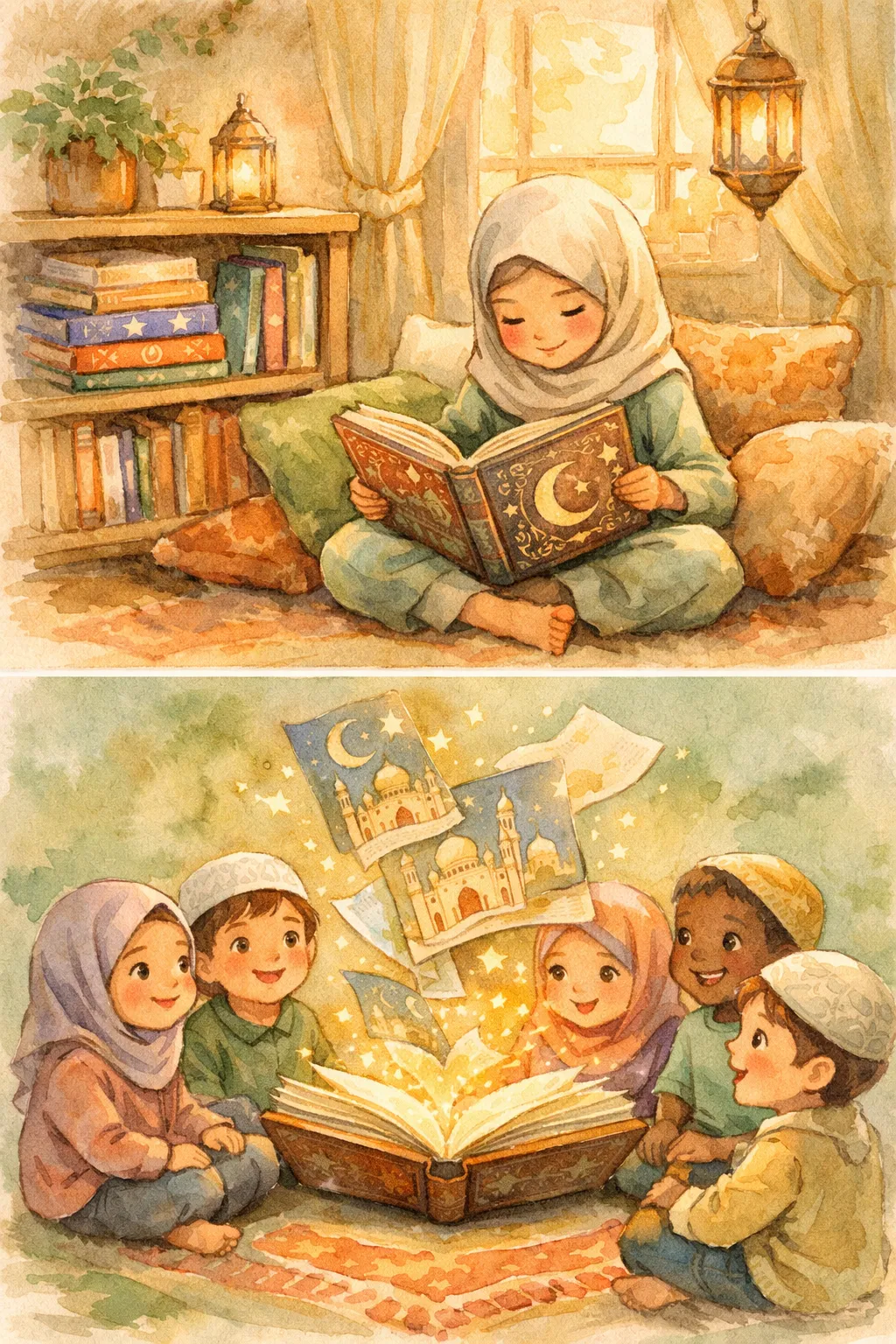
📖 Looking for Quran stories your kids will love?
Start Their Qur'an Journey →There's a moment every Muslim parent knows. Your child picks up a book from the shelf and asks: "Mama, is this about us?" They're looking for themselves in stories. They want characters who pray like they do. Characters who say Bismillah before eating. Characters who celebrate Eid. And too often, they don't find them.
That's what makes Islamic books for kids so powerful. They don't just teach — they mirror. They tell your child: "You belong. Your faith is beautiful. Your stories are worth telling." When a child grows up with books that reflect who they are, something special happens. Islam stops being "the thing we do on Fridays." It becomes the air they breathe.
This guide will help you pick the best Islamic story books for kids. We've sorted them by age and by type. We also matched them to the moments when your child needs them most.
Why Islamic Books Matter More Than You Think
Let's be honest. We live in a world that tells our kids someone else's story. TV shows, school books, library shelves — the default is Western stories. There's nothing wrong with those. But if that's all your child reads, they start to feel like their own story doesn't fit.
Islamic books for kids fix that. They do three things that weekend Islamic school alone can't:
- 📖They make faith feel normal. When a character says "Alhamdulillah" after a good day, your child sees that faith isn't just for special times. It's part of everyday life.
- 🌙They build identity early. A 3-year-old who sees a hijabi character in their favorite book grows up knowing that Muslims are heroes too. That shapes who they become.
- ❤️They create emotional bonds with faith. A child who cries when Prophet Yusuf is thrown into the well has truly felt what patience means. That goes deeper than any memorized hadith about sabr.
Research backs this up. Kids who are read to often build stronger word skills. They also feel closer to their culture. Add Islamic books to that habit and you're raising a child who loves both reading and their deen. (If you're looking for stories to tell out loud, check our guide to Islamic stories for kids.)
The Best Islamic Books for Kids by Age Group
Not all muslim kids books are the same. What grabs a toddler will bore an 8-year-old. What inspires a tween will be too much for a preschooler. Here's how to match the right books to the right age.
Ages 0–3: Board Books and First Words
At this age, it's not about understanding — it's about feeling. Your baby is learning that books are warm, safe, and tied to your voice. Islamic board books bring in simple ideas: the moon and stars (Allah's creation), "Bismillah" before eating, and the sound of Arabic letters.
What to look for:
- • Sturdy board pages that survive teething and throwing
- • Bold, high-contrast pictures (babies respond to strong colors)
- • Simple words: "Allah made the sun. Allah made the moon. Allah made you."
- • Touch-and-feel or lift-the-flap elements to keep tiny hands engaged
Top picks: "My First Quran Words" board books, "A is for Allah" alphabet books, "Baby's First Eid" series, and any book that pairs Arabic letters with textures or sounds.
Ages 3–5: Picture Books and Simple Stories
This is the golden age of picture books. Your child can follow a simple story and connect with characters. They'll also want the same book read 47 times in a row. Use that! The repeat readings help the message stick.
What to look for:
- • Beautiful, full-page pictures (this age picks books by the art — and they're right to)
- • Stories about sharing, kindness, honesty — Islamic values through action, not lecture
- • Characters who look like your child (hijab, kufi, diverse skin tones)
- • Simple prophet stories: Nuh and the animals, Ibrahim and the stars
Top picks: "The Proudest Blue" by Ibtihaj Muhammad, Learning Roots' "Seerah Series" for little ones, "Ramadan Moon" by Na'ima B. Robert, and simplified prophet stories for kids picture books.
Ages 5–8: Early Readers and Illustrated Chapter Books
Your child is reading now — or starting to. This is when Islamic story books for kids really change things. They can follow longer stories and understand cause and effect. They also start asking "why" about everything — including faith.
What to look for:
- • Illustrated chapter books with 50-100 pages
- • Prophet stories with more detail and emotion (the full story of Yusuf, not just the highlights)
- • Books about Islamic manners, daily duas with transliterations, and "what to say when…" guides
- • Adventure stories featuring Muslim protagonists
Top picks: "My First Quran Storybook" (Goodword), "Muslim Superheroes" series, "Omar and Hana" books, and dua/prayer guides designed for early readers.
Ages 8–12: Independent Readers and Deeper Dives
This is when kids form opinions about everything — including whether Islam is "cool" or "boring." The right books make all the difference. Your child is ready for Islamic history and stories about Muslim scientists. They can also enjoy fiction with Muslim characters facing real-life problems.
What to look for:
- • Middle-grade novels with Muslim main characters (seeing yourself in a book matters a lot at this age)
- • Islamic history books: the golden age of Islam, Muslim inventors, explorers
- • Detailed seerah (life of Prophet Muhammad ﷺ) written for young readers
- • Books about identity: being Muslim at school, fitting in while standing out
Top picks: "The Golden Age of Islam" illustrated histories, "Amira's Picture Day" and other #OwnVoices Muslim fiction, "Great Muslim Philosophers and Scientists" series, and age-appropriate seerah collections.
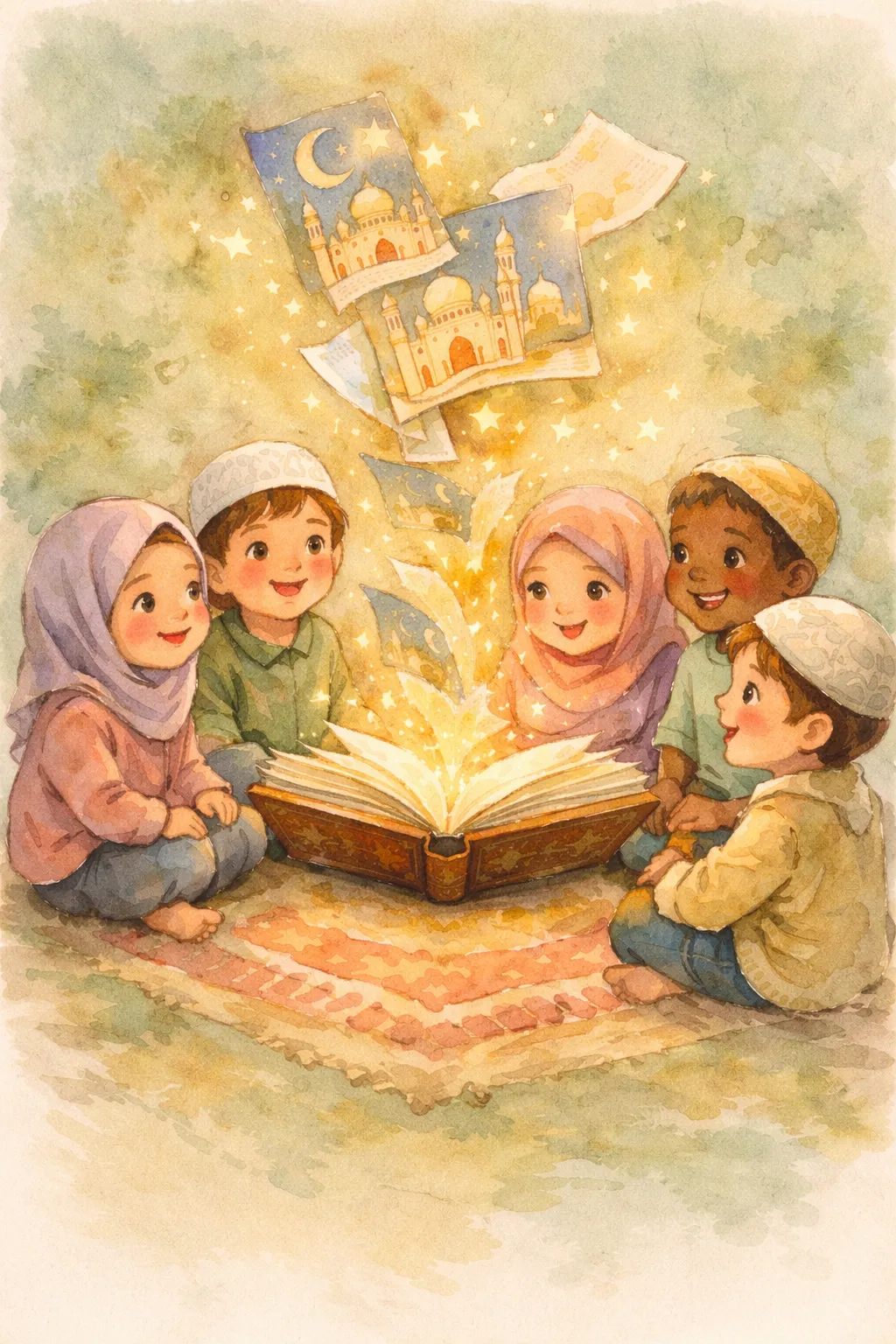
7 Categories Every Muslim Kids' Library Needs
Instead of buying at random, think of your child's Islamic library as having sections — like a bookshop. Here are the seven types that cover all the bases.
1. Prophet Stories and Seerah
The backbone of any Islamic library. These books bring the prophets to life — not as faraway figures but as real people your child can look up to. Start with simple versions for young kids. Move to longer retellings as they grow. The stories of Prophet Yusuf, Prophet Ibrahim, Prophet Musa, and Prophet Muhammad ﷺ belong in every Muslim home. (Need ideas? Our prophet stories for kids guide has ten great ones.)
2. Quran Stories and Tafsir for Kids
These books retell Quran stories in words kids can understand. Think the People of the Cave or Sulaiman and the ants. The best ones show the actual Quranic verses next to the retelling. That way kids start linking stories to the source. For bedtime reading, our collection of Quran stories for kids is a great place to start.
3. Daily Dua and Prayer Books
These are about daily faith in action. Books that teach the dua for waking up and eating. The best ones use pictures and simple spellings so kids can learn the words. Pair these with our guide on teaching kids salah for a full worship foundation.
4. Islamic Manners and Character Books
Akhlaq (character) is half of Islam. Books about honesty and patience help kids see that being a good Muslim means being a good person. Look for books that show characters living these values through stories. Not just listing rules.
5. Ramadan, Eid, and Celebration Books
Every child deserves to feel that their holidays are special. Ramadan countdown books and Eid morning stories make Islamic holidays feel as exciting as any other. These books are extra important for Muslim kids in places where their holidays aren't shown in the world around them. (For activity ideas, see our Ramadan activities for kids guide.)
6. Muslim Heritage and History
Did you know Muslims invented algebra and built the first hospitals? Most kids don't. School textbooks skip that part. Books about the Islamic golden age and Muslim inventors like Al-Khwarizmi and Ibn Sina give kids pride in their roots. They also give them answers when classmates ask "what have Muslims ever done?"
7. Fiction Featuring Muslim Characters
Not every book needs to be "about Islam." Sometimes the best thing is a detective story where the main character wears hijab. Or a sports book where the hero prays Maghrib before the big game. These books make Muslim identity feel normal in daily life. That's what kids need to see.
How to Buy Islamic Story Books: A Parent's Checklist
The market for muslim kids books has grown fast in recent years. That's great. But it also means quality varies a lot. Here's how to spot the gems and skip the filler.
🔍 The 5-Point Quality Check
- 1.Pictures matter. Children's books live or die by their art. Beautiful, diverse pictures show a publisher who cares. Clip-art-level images show the opposite.
- 2.Check the Islamic content. Not all Islamic books are made with equal care. Look for books reviewed by scholars or from trusted Islamic publishers.
- 3.Read the reviews. Muslim parent groups on social media are great at finding gems and warning about problems. A quick search of the title + "review" can save you money.
- 4.Check for diversity. Do the characters show the global Muslim community? The ummah includes many backgrounds. Good books show that.
- 5.The "read it again" test. Borrow before you buy when you can. If your child asks for the book the next night, buy two copies — one for the shelf and one for the car.
Beyond Books: Digital Islamic Stories for Kids
Physical books can't be replaced — but let's be real. Kids today grow up with screens. Instead of fighting that, smart parents use it. Islamic story apps, audiobooks, and Quran apps work great next to your book collection.
Apps like Islamic Stories for Kids offer illustrated Quran stories and prophet tales kids can explore on their own. They mix pictures with audio narration. That makes them great for car rides and waiting rooms. They're perfect for those moments when you need 15 minutes to cook dinner in peace.
📱 Looking for interactive Islamic stories?
Our app brings Quran stories and prophet tales to life with beautiful pictures and gentle narration — perfect for young Muslims ages 3-10.
Explore the App →Building a Reading Habit: Practical Tips
Buying the books is the easy part. Getting your kids to actually read them? That takes a bit of strategy. Here's what works:
- 🌙Make it a bedtime habit. One Islamic story every night before sleep. No screens. This single habit gives your child hundreds of Islamic stories by age 10.
- 📚Keep books at child height. If Islamic books are on the top shelf and comics are on the floor, guess which ones get read? Put Islamic books where little hands can reach them.
- 🎁Give books as Islamic gifts. Eid gifts, Ramadan countdown treats, "you finished a juz" rewards — make books the go-to gift. Your child will link Islamic holidays with the joy of a new story.
- 👨👩👧👦Read together, even when they can read alone. Reading together builds closeness. A 9-year-old who reads on their own still gains a lot from a parent reading to them. It's about the bond, not the skill.
- 🔄Rotate the shelf. Put half the books away and swap them each month. "New" old books feel just as exciting as truly new ones. And re-reading helps kids understand more each time.
Where to Find Islamic Story Books
The best places to find quality Islamic books for kids:
- Islamic bookshops — online or near your local mosque. They pick quality books and can suggest titles by age.
- Amazon — search "islamic books for kids" and filter by ratings. The selection is huge, but use the quality checklist above.
- Muslim-owned publishers — Kube Publishing, Learning Roots, Prolance, Shade 7 Publishing, and Ruqaya's Bookshelf all make great books.
- Library requests — many public libraries will order Islamic kids' books if you ask. This helps other Muslim families in your area too.
- Book swaps — set one up at your mosque. One family's finished books become another family's treasures.
Start Small, Start Now
You don't need a 200-book Islamic library overnight. Start with five books. One prophet story collection. One dua book. One Ramadan story. One Islamic manners book. One fiction book with a Muslim main character. Read one every night. In a month you'll go through the set six times. Your child will know those stories by heart.
Then add one or two books per month. By next year you'll have a library that matches any Islamic school's shelf. And your child will see Islam not as something they have to learn — but as a world of stories they get to explore.
Because that's what Islamic books for kids really do. They don't just teach Islam. They make Islam feel like home.
📚 Keep Reading
- Islamic Stories for Kids: The Best Stories to Share with Your Children
- Prophet Stories for Kids: 10 Inspiring Tales Every Muslim Child Should Know
- 7 Beautiful Quran Stories to Tell Your Kids at Bedtime
- How to Make Salah a Habit for Your Kids (Without the Fight)
- Ramadan Activities for Kids: 15 Ways to Make It Special