Islamic Stories for Kids: The Best Stories to Share with Your Children
If you've ever watched your child's face light up during storytime, you know the magic. Islamic stories for kids aren't just bedtime tales. They're bridges that connect little hearts to lasting wisdom. They build faith one story at a time.
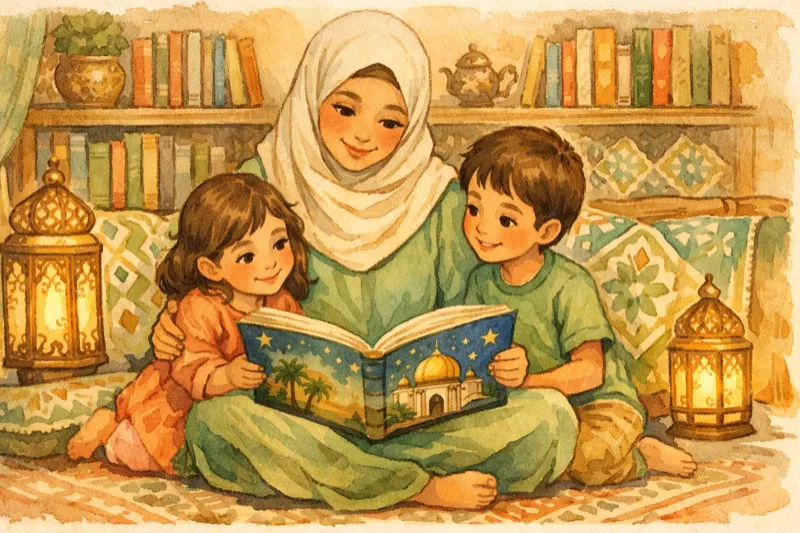
📖 Looking for Quran stories your kids will love?
Start Their Qur'an Journey →I still remember the first time my daughter asked for an Islamic story. She was four, curled up under her blanket. Instead of a picture book, she said, "Tell me about the prophets, Mama." That's when I knew: our kids are hungry for these stories. They want heroes who loved Allah. Heroes who faced hard times and stayed strong. Heroes they can believe in. (If you're looking for perfect bedtime Quran stories, we picked seven of the most beautiful ones.)
And the beautiful thing? Islam gives us endless stories to share. Stories that teach patience, kindness, bravery, and faith. They've been passed down for over 1,400 years. They touch something deep in every heart.
Why Islamic Stories Matter for Children
Before we get into the stories, let's talk about why this matters. Our kids see so much content every day — cartoons, apps, YouTube videos. Islamic stories offer something different. Something real.
When you tell your child an Islamic story, you're not just keeping them busy. You're teaching them about Allah's mercy through Prophet Nuh's patience. You're showing them bravery through Prophet Ibrahim. Faith isn't just an idea — it's something real people lived. People who struggled and never gave up on Allah.
Plus, these stories are amazing. A baby speaks from the cradle to defend his mother. A sea splits to save a people. A boy is thrown into a well and becomes the leader of Egypt. These aren't fairy tales. They're true stories from the Quran. And they're more exciting than any cartoon.
The Best Islamic Stories for Children (By Age)
For Toddlers and Preschoolers (Ages 2-5)
At this age, keep it simple. Focus on one clear lesson. Use lots of feeling in your voice. Maybe act things out a little. Here are the best Islamic stories for this age group:
1. Prophet Muhammad (ﷺ) and the Kind Neighbor
Tell them about how the Prophet had a neighbor who threw garbage at him every day. But when she got sick and stopped, the Prophet went to check on her. This teaches kids to be kind — even to people who are unkind to us.
💚 Why It Works
Simple, concrete actions (throwing garbage, visiting someone sick) that young kids can understand. The lesson is crystal clear: be kind, always.
2. Prophet Sulaiman Talks to the Ants
Kids love this one because it involves talking animals! Tell them how Prophet Sulaiman heard an ant warning the other ants to go home so they wouldn't get stepped on. He smiled and thanked Allah for this gift. Share how he was kind even to the tiniest creatures.
💚 Why It Works
Talking animals are instantly fun for little ones, and the message about being kind to all of Allah's creation is easy to grasp.
3. The Prophet's Love for Children
Tell them how Prophet Muhammad (ﷺ) would shorten his prayer if he heard a baby crying. Tell them how he let his grandkids climb on his back during prayer. These stories show kids that the Prophet loved kids just like them.
💚 Why It Works
Children see themselves in these stories. "The Prophet loved kids like me!" This builds a personal connection to him.
For Early Elementary (Ages 5-8)
Now they can follow longer stories and understand deeper lessons. These Islamic stories build on what they already know:
4. Prophet Yusuf's Beautiful Patience
This is one of the most complete stories in the Quran. Tell it in parts. How Yusuf had a special dream. How his brothers were jealous and threw him in a well. How he was sold as a slave but stayed good. How he went to prison but never gave up on Allah. And how he became the minister of Egypt and forgave his brothers.
💚 Why It Works
It's the ultimate story of patience and trusting Allah's plan. Kids understand unfairness. They can see how staying patient and faithful leads to good endings.
5. Prophet Nuh and the Great Ark
Tell them how Prophet Nuh invited people to believe in Allah for 950 years! Can they imagine being patient for that long? Then Allah told him to build a huge boat even though they weren't near water. Everyone laughed. But Nuh trusted Allah. When the flood came, those who believed were saved in the ark with pairs of every animal.
💚 Why It Works
The visual of the ark and all the animals makes it memorable. The lesson about never giving up on doing good is powerful.
6. Prophet Ibrahim's Unshakable Trust
Share how young Ibrahim looked at the stars and the moon. He knew the One who created all of this must be greater than all of it. Tell them how he broke the idols to show people they were powerless. When people threw him in a fire, Allah made the fire cool and safe for him. End with the biggest test: when Allah asked him to sacrifice his son. Both Ibrahim and Ismail obeyed. But Allah replaced Ismail with a ram.
💚 Why It Works
Many powerful scenes that teach about thinking for yourself, bravery, and full trust in Allah. Plus it connects to Eid al-Adha which they celebrate!
For Older Children (Ages 8+)
Now you can explore more nuanced stories and have deeper discussions about the lessons:
7. The People of the Cave
Tell them about the young men who refused to worship idols when everyone around them did. They escaped to a cave and fell asleep, trusting Allah to protect them. When they woke up, they thought they'd slept for a day — but it had been 309 years! The whole city had changed, and now everyone believed in Allah.
💚 Why It Works
The time-travel part fascinates older kids. The message about standing up for your beliefs — even when you're young and everyone disagrees — is so important today.
8. Maryam: The Woman Honored Above All Women
Share how Maryam was so devoted to Allah that she spent her days in worship. When an angel told her she would have a son through a miracle, she was afraid of what people would say. But Allah provided for her — fresh dates from a palm tree when she was alone giving birth. And then baby Isa spoke from the cradle to defend his mother's honor.
💚 Why It Works
Very powerful for girls to see a woman honored so highly in the Quran. It teaches about trusting Allah even in scary times. It shows how Allah defends those who are sincere.
9. Prophet Muhammad's Night Journey (Isra and Mi'raj)
Tell them about the miraculous night when the Prophet traveled from Makkah to Jerusalem and then ascended through the seven heavens, meeting the previous prophets and receiving the gift of the five daily prayers from Allah.
💚 Why It Works
The miraculous journey grabs the imagination. It teaches about the importance of prayer. And it connects to all the prophets who came before.
How to Tell Islamic Stories in a Way That Sticks
Here's what I've learned from years of sharing these stories with my own kids and others:
1. Make It Conversational, Not a Lecture
Don't just recite facts. Tell it like you're sharing something amazing that happened. Use "Can you imagine...?" and "What do you think happened next?" Get them involved.
2. Connect It to Their Lives
After telling how Prophet Yusuf forgave his brothers, ask: "Has someone ever been unkind to you? How did it feel? Do you think you could forgive them like Yusuf did?" Make it real for them.
3. Use Illustrated Books
Most kids learn better with pictures. A beautifully drawn Islamic storybook can make the stories come alive. My kids would sit and stare at the pictures even after storytime was over.
4. Don't Worry About Perfect Details
You don't need every single detail memorized. Focus on the main lesson and the key moments. If your child asks something you don't know, just say, "Great question! Let's look it up together."
5. Repeat, Repeat, Repeat
Kids love hearing the same stories over and over. You don't need a new story every night. When they ask for Prophet Yusuf for the tenth time, it means they're really taking it in. Each time you can focus on a different part or ask different questions.
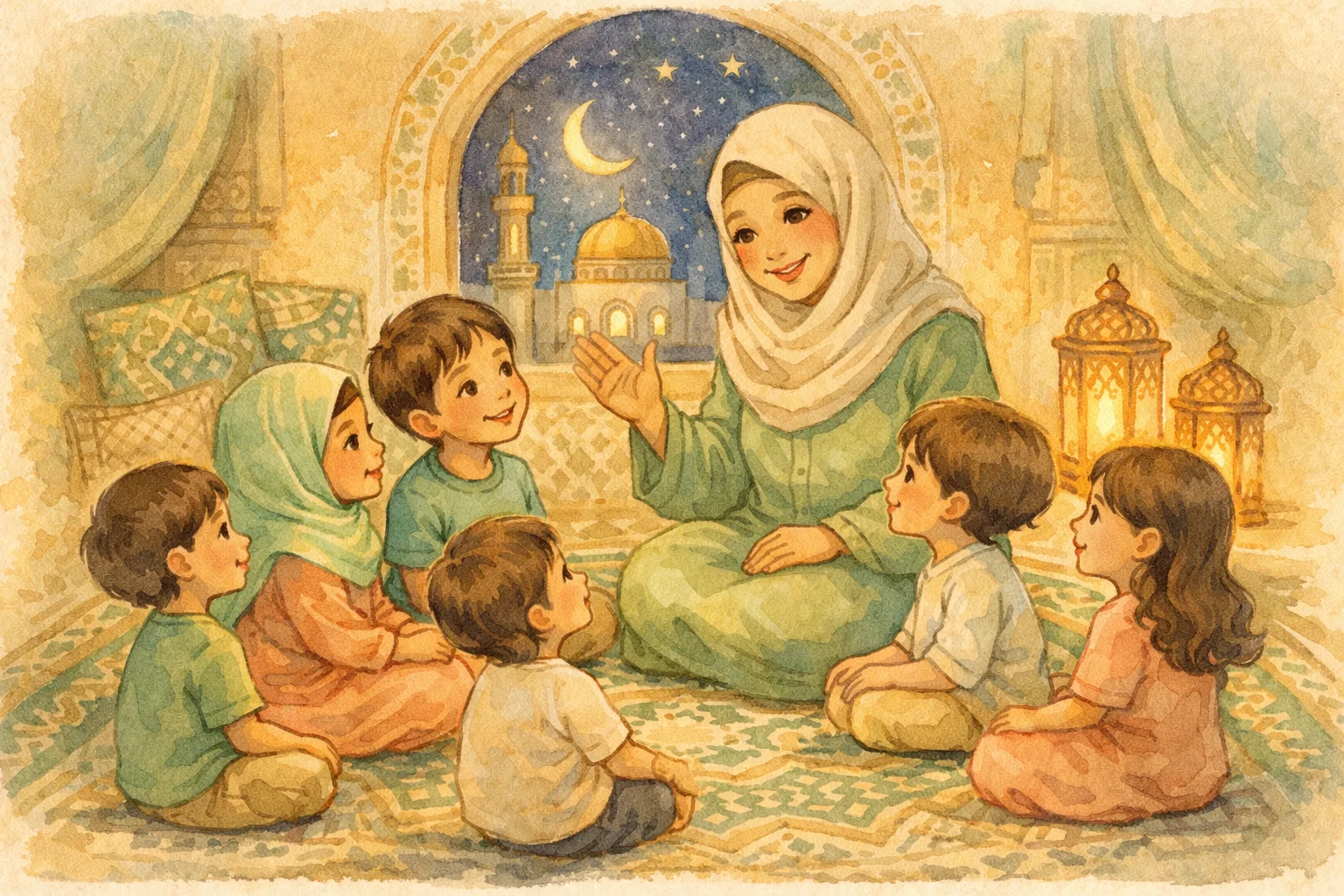
Building a Storytelling Routine
The best way to make Islamic stories a natural part of your child's life is to build a routine. Here's what works for many families:
- Bedtime stories: That quiet moment before sleep is perfect. Their mind is calm and receptive.
- Weekend storytelling sessions: Saturday or Sunday morning, make hot chocolate and gather for story time.
- Car rides: Long drives are perfect for telling stories. No screens, just conversation and stories.
- After prayer: Tell a quick 2-minute story after Maghrib prayer. It creates a beautiful association between prayer and learning. (Speaking of prayer habits, here's how to make salah a natural habit for your kids.)
- During Ramadan: Make nightly story time a special Ramadan tradition alongside other meaningful Ramadan activities.
The key is being steady. When storytelling becomes part of the routine, that's when it becomes truly special.
What Makes a Good Islamic Story for Kids?
Not every story needs to be told the same way to every child. Here's what to think about when picking and telling Islamic stories for kids:
Age-Appropriate Content
For young kids, skip the scary parts. You can tell the story of Prophet Yusuf without going deep into being thrown in a well. Focus on "his brothers were mean, but he stayed patient and kind."
As they get older, you can slowly share more of the truth — that prophets faced real hardship. Following Allah isn't always easy. But He is always with those who trust Him.
Clear Moral Lessons
Every good Islamic story for kids should have a clear takeaway. "What did we learn from this story?" should have an obvious answer. Be patient like Yusuf. Be brave like Ibrahim. Be kind like the Prophet Muhammad (ﷺ). Be grateful like Sulaiman.
Authentic Sources
When telling stories about prophets, stick to what's in the Quran and authentic hadith. There are many made-up stories out there. But we want to teach our kids what's true. If you're not sure about a detail, it's better to skip it. Or note that it's from historical accounts, not revelation.
Resources for Islamic Stories for Children
You don't have to do this alone. Here are some resources that can help:
- Illustrated Storybooks: Look for beautifully illustrated books from publishers like Goodword Books, Islamic Foundation, and Kube Publishing.
- Apps and Audiobooks: There are excellent apps with Islamic stories read by professional narrators. Great for car rides or quiet time.
- YouTube Channels: Channels like "Islamic Stories for Children" and "One Islam Productions" have animated versions of prophet stories (just preview them first to ensure quality).
- Story Collections: Our own Islamic Stories ebook brings together beautifully illustrated versions of the most beloved stories, perfect for reading together.
Common Questions Parents Ask
What if my child asks difficult questions?
This is actually beautiful! It means they're thinking deeply. If they ask "Why did Prophet Yusuf's brothers do that?" or "Why didn't Allah just make everyone believe?", don't panic. Answer honestly at their level. "That's a great question. Allah gave people free will — the choice to do good or bad. Prophet Yusuf's brothers made a bad choice, but Allah turned it into something good."
If you don't know the answer, say so. "I'm not sure, but let's learn together. Maybe we can ask the imam or look it up."
How do I compete with screens and cartoons?
You're not competing — you're offering something different and deeper. Make storytelling special. Dim the lights, get cozy, maybe light a bakhoor candle. Use different voices for different characters. Let them ask questions and make predictions.
The intimacy of a parent telling a story, with eye contact and conversation, creates a bond that no screen can replicate. Over time, they'll crave these moments.
Should I only tell stories about male prophets?
Absolutely not! Tell stories about Maryam, Asiya (Pharaoh's wife who believed), Hajar (Ibrahim's wife), Khadijah, Aisha, Fatimah, and the many strong women in Islamic history. Both boys and girls need to see examples of faith from men and women.
The Long-Term Impact of Islamic Stories
Here's what I've noticed over the years: the stories stick. My daughter is now ten. When she faces a challenge at school, I sometimes hear her say, "I'm going to be patient like Prophet Yusuf." My son, when he sees someone being unkind, remembers how the Prophet was kind even to people who hurt him.
These stories become part of their inner guide. They're not just tales they heard once. They become models for how to live. When they're teenagers facing peer pressure, they'll remember the young men who went to the cave. When they face unfairness, they'll remember Prophet Yusuf who stayed patient and faithful.
We're not just teaching them facts. We're shaping how they see the world. How they handle hard times. How they connect with Allah. That's the power of Islamic stories for kids.
Start Tonight
You don't need to be a great storyteller. You don't need expensive books or perfect knowledge. You just need the wish to connect your child to these beautiful stories.
Tonight, before bed, snuggle up with your little one and say, "Let me tell you about a very special person..." Start with Prophet Muhammad and the kind neighbor, or Prophet Sulaiman and the ants. Keep it simple. Watch their eyes light up.
That's where it begins. One story at a time. One moment of connection at a time. Building a foundation of faith that, inshaaAllah, will last them their entire lives.
These Islamic stories for kids are your heritage. They're your kids' heritage. They've been passed down for over 1,400 years because they matter. They change hearts. They build believers.
May Allah make our kids among those who love His Book and follow the example of His prophets. Ameen. 💚