Islamic Stories for Kids PDF: Free & Premium Downloads for Muslim Families
Looking for Islamic stories for kids in PDF format? Whether you want free printable tales for bedtime, premium illustrated ebooks for your home library, or activity-packed story guides for homeschool — this guide covers everything Muslim parents need to know about finding, choosing, and using Islamic story PDFs.
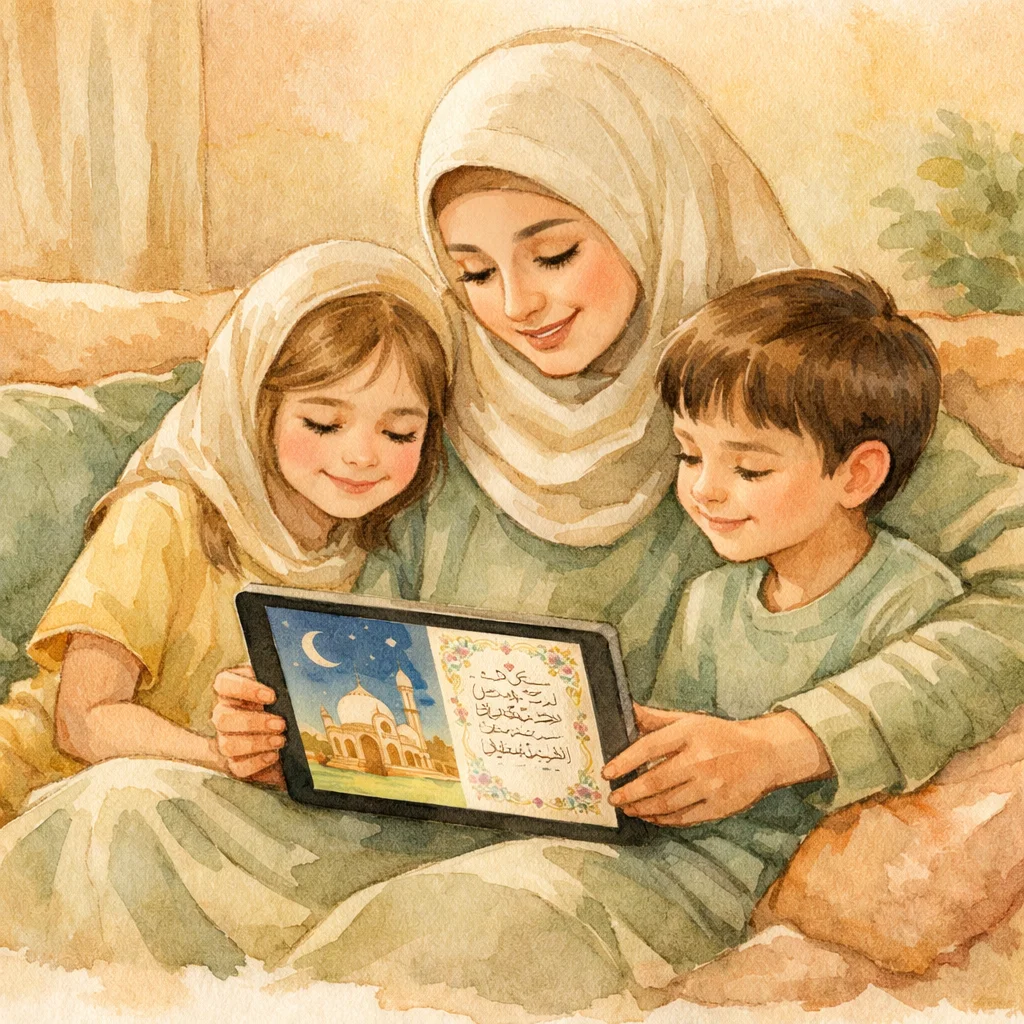
Why Islamic Story PDFs Are a Game-Changer for Muslim Parents
If you've ever tried to build an Islamic stories for kids library from scratch, you know two things: good books are expensive, and shipping takes forever. That's where PDFs change everything.
An Islamic stories for kids PDF gives you instant access to beautifully told tales of prophets, companions, and moral lessons — no shipping, no waiting, no shelf space needed. You can read them on a tablet during road trips, print them for weekend Islamic school, or project them during family story time.
Here's why more Muslim families are turning to digital story resources:
- Instant access — Download and start reading within minutes, anywhere in the world
- Printable — Print copies for each child, for the car, for grandma's house
- Affordable — Many free options; premium PDFs cost a fraction of hardcover books
- Portable — Carry hundreds of stories on one device
- Searchable — Find specific prophets, themes, or lessons instantly
- Eco-friendly — Only print what you need, when you need it
The best part? You can mix and match. Use free PDFs for variety, invest in premium illustrated ebooks for your favorites, and print activity sheets to keep little hands busy during story time.
Where to Find Free Islamic Stories for Kids PDF Downloads
The internet is full of Islamic story PDFs, but quality varies wildly. Some are beautifully designed with accurate hadith references. Others are poorly formatted Word documents with questionable sourcing. Here's where to find the good stuff:
1. Islamic Homeschool Blogs
Muslim homeschool bloggers are absolute gold mines for free Islamic stories for kids PDF resources. Many create their own printable story packs, complete with illustrations, comprehension questions, and coloring pages. Search for "Islamic homeschool printables" and you'll find dozens of generous creators sharing their work.
2. Islamic Publisher Free Samples
Publishers like Dar-us-Salam, Learning Roots, and Kube Publishing occasionally offer free PDF sample chapters or short stories. Sign up for their newsletters — they often share free downloads during Ramadan, Eid, and back-to-school seasons.
3. Masjid and Islamic School Resources
Many mosques and weekend Islamic schools create their own story PDFs for curriculum use and share them freely online. These are especially well-suited for group reading and classroom activities since they're designed for educational settings.
4. Muslim Authors on Free Platforms
Independent Muslim authors share free Islamic stories for kids on platforms like Teachers Pay Teachers (search the free section), Google Drive shared folders in homeschool communities, and personal websites. Many offer their first story free as a sample, with premium collections available for purchase.
⚠️ A Word of Caution
Always verify the Islamic accuracy of free PDFs. Check that Quran verses are correctly cited, hadith references are authentic (sahih), and the stories align with mainstream Islamic scholarship. When in doubt, cross-reference with trusted sources like the works of Ibn Kathir or consult your local imam.
Premium Islamic Story PDFs & Ebooks Worth Every Penny
Free resources are wonderful for variety, but when it comes to the stories your children will read again and again — the ones that shape their understanding of faith — investing in professionally illustrated, carefully researched ebooks makes a real difference.
Premium Islamic stories for kids PDF collections typically offer:
- Professional illustrations — Beautiful artwork that brings stories to life and captures children's imaginations
- Scholarly accuracy — Stories reviewed by Islamic scholars for authenticity
- Age-appropriate language — Carefully crafted text that matches developmental stages
- Discussion prompts — Questions and activities to deepen understanding
- Consistent quality — Every page designed to engage and inspire
📚 Our Illustrated Ebook Collection
We've created a growing library of beautifully illustrated Islamic stories for kids ebooks — from prophet tales and Quran stories to moral lessons and bedtime series. Each ebook features original watercolor artwork, age-appropriate retellings, and discussion questions for family reading time.
Browse Our Ebooks →How to Use Islamic Story PDFs Effectively
Having a great PDF is only half the battle. How you use it determines whether your child develops a genuine love for Islamic stories for kids or sees them as just another assignment. Here are proven approaches:
The Family Reading Ritual
Set a consistent time — after Maghrib prayer works beautifully — and read one story together as a family. Display the PDF on a tablet or laptop where everyone can see the illustrations. After reading, ask open-ended questions: "What would you have done if you were Prophet Ibrahim?" This turns passive reading into active faith-building.
Print-and-Bind Collections
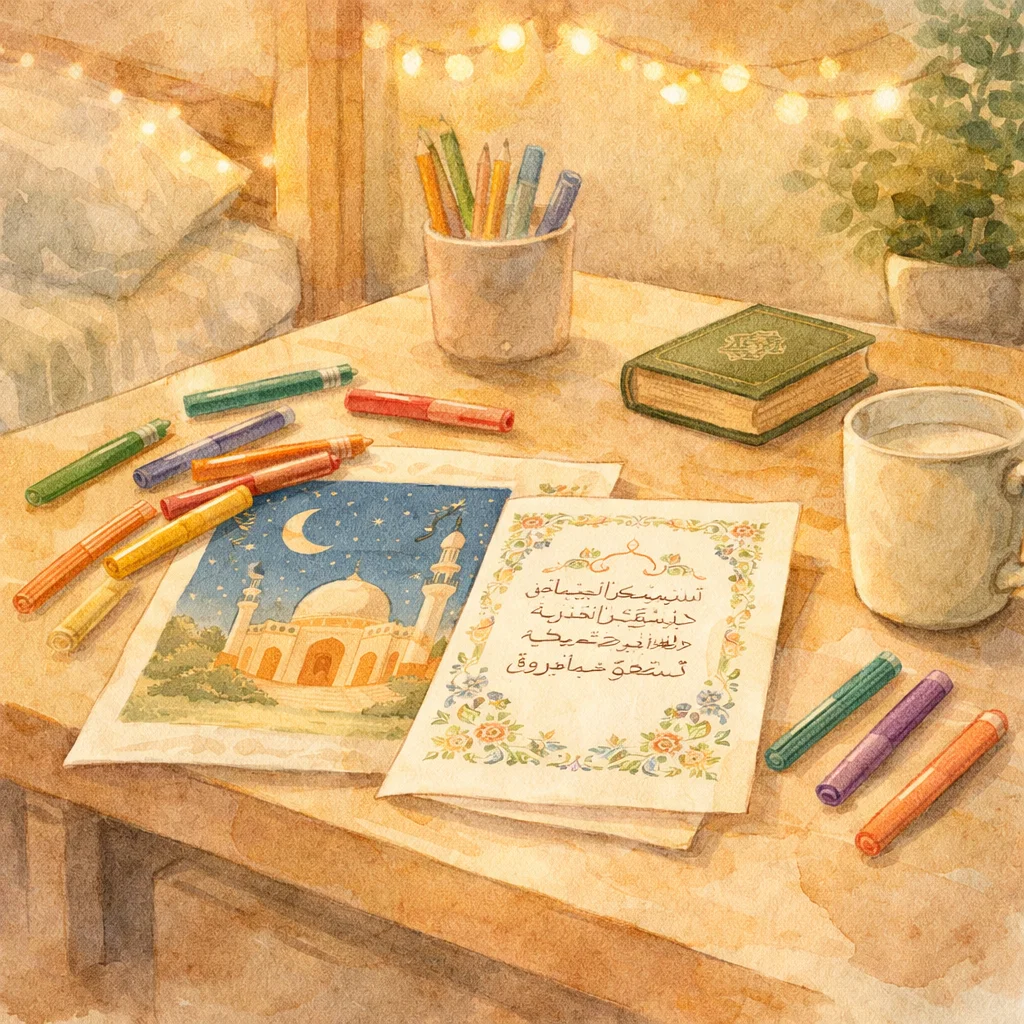
Print your favorite stories, punch holes, and let your child create their own "My Islamic Story Book." Kids take incredible ownership of books they've helped assemble. Add blank pages between stories for them to draw their favorite scenes. This simple activity turns a PDF into a treasured keepsake.
Story Stations for Homeschool
If you homeschool, create "story stations" around the house. Print different Islamic stories and place them at the kitchen table, reading nook, and bedroom. Rotate weekly. Children naturally gravitate toward whatever story is in front of them, and variety keeps the material fresh.
Bedtime PDF Library on a Tablet
Create a dedicated folder on a tablet with your child's favorite Islamic stories for kids PDF files. Let them choose which story to read each night. The act of choosing gives them agency, and the ritual of bedtime stories creates positive associations with Islamic learning. Pro tip: use night mode to reduce blue light before sleep.
Car Ride Story Packs
Going on a trip? Print 5-6 short Islamic stories, staple each one separately, and toss them in a ziplock bag. Instant car entertainment that's screen-free and faith-building. When the stories get crumpled and dog-eared, you know they've been loved — and you can just print more.
Best Types of Islamic Story PDFs by Age Group
Not all PDF stories work for every age. Here's what to look for at each stage:
Ages 2–4: Picture-Heavy PDFs
At this age, illustrations do 90% of the work. Look for PDFs with full-page watercolor or cartoon-style images and just 1-2 simple sentences per page. Topics should be concrete: animals in the Quran (the whale that swallowed Yunus, the birds of Abrahah), simple duas, and "Allah made..." themes. Print them large — A4 or even A3 — so little eyes can drink in the details.
Ages 5–8: Story + Activity PDFs
This is the sweet spot for Islamic stories for kids PDF content. Children at this age can follow narrative arcs, understand cause and effect, and connect stories to their own lives. Look for PDFs that combine a 4-6 page story with follow-up activities: coloring pages, word searches with Islamic vocabulary, "draw your favorite part" prompts, and simple comprehension questions.
Ages 9–12: Chapter-Style PDFs
Older children want depth. They're ready for longer PDFs that cover an entire prophet's story across multiple chapters, explore the historical context of Quran revelations, or present Islamic morals through fictional stories set in modern life. Include maps, timelines, and "did you know?" sidebars. These readers can handle — and appreciate — the nuance.
Creating Your Own Printable Islamic Story Guides
One of the most rewarding approaches is creating your own story PDFs tailored to your family. It's easier than you think:
- Choose a story — Pick a prophet's story, a hadith about kindness, or a Quran parable your child needs to hear right now
- Simplify the language — Retell it in words your child actually uses. A 5-year-old doesn't need "And thus did Prophet Musa traverse the parted sea." They need "Musa walked right through the ocean! Can you imagine? The water stood up like giant walls on each side!"
- Add visuals — Use Canva (free tier works fine) to create pages with Islamic geometric borders, relevant illustrations, and clean typography
- Include a lesson page — End with "What did we learn?" and 2-3 discussion questions
- Save as PDF — Export from Canva or Google Slides as a PDF and print
Your homemade PDFs won't look like professional publications, and that's fine. Your child will love them precisely because you made them. And you can customize every story to address exactly what your family is going through.
Digital vs. Print: How to Get the Best of Both Worlds
The debate between digital and print reading is real, and both sides have merit. Here's the practical Muslim parent's approach:
Use digital (tablet/phone) for:
- Travel and waiting rooms — your entire story library fits in one device
- Bedtime reading in dim light (with night mode on)
- Trying out new stories before committing to print
- Interactive PDFs with audio or clickable elements
Use printed PDFs for:
- Stories you read repeatedly — children engage more deeply with physical pages
- Activity-based PDFs (coloring, drawing, writing)
- Classroom and group settings
- Reducing screen time while maintaining Islamic learning
- Creating personalized story binders
The smartest approach: maintain a digital library of everything, and print the winners. When your child asks to hear a story for the third time, that's your signal to print it, bind it, and make it permanent.
Building a Complete Islamic Story PDF Library
A well-rounded Islamic stories for kids collection should cover these essential categories:
- Prophet stories — From Adam to Muhammad ﷺ, covering key moments and lessons
- Quran stories — The People of the Cave, the story of Maryam, Sulaiman and the ants
- Companion stories — The bravery of Bilal, the generosity of Khadijah, the justice of Umar
- Moral & character stories — Honesty, kindness, patience, gratitude through Islamic lens
- Daily life & dua stories — Making wudu, going to the masjid, saying bismillah
- Seasonal stories — Ramadan, Eid, Hajj, Muharram
- Islamic history — For older kids: the early Muslim community, Islamic Golden Age, Muslim scientists
You don't need to collect all of these at once. Start with prophet stories (the foundation of every Muslim child's education) and build outward. Over months, your PDF library will grow into something beautiful — and your children will have a treasure trove of Islamic stories for kids that they can return to again and again.
Ready to Start Your Islamic Story Collection?
Our beautifully illustrated ebooks bring prophet stories, Quran tales, and moral lessons to life with original watercolor artwork. Instant download, read on any device, print as many copies as you like.
Explore Our Ebook Collection →Frequently Asked Questions
Where can I find free Islamic stories for kids PDF downloads?
Several trusted sources offer free Islamic story PDFs: Muslim homeschool blogs, Islamic publisher newsletters (especially during Ramadan), masjid educational resources, and the free sections of platforms like Teachers Pay Teachers. For premium illustrated ebooks with professional artwork, check out our ebook collection.
Are Islamic story PDFs better than physical books?
Both have strengths. PDFs are more affordable, instantly accessible, and printable. Physical books offer tactile engagement that younger children benefit from. The best approach combines both — use PDFs for variety and travel, physical books for favorites you read nightly.
What age group are Islamic story PDFs suitable for?
There are Islamic story PDFs for every age. Toddlers (2-4) need picture-heavy PDFs with 1-2 sentences per page. Ages 5-8 thrive with story-plus-activity PDFs. Ages 9-12 are ready for chapter-style PDFs with historical context and deeper themes.
Can I print Islamic story PDFs for my Islamic school class?
Most free Islamic story PDFs allow personal and educational use. Premium PDFs typically allow personal family printing but not redistribution. Always check the license on the download page, or contact the publisher for classroom-use permission.